

Category: base rate base rate
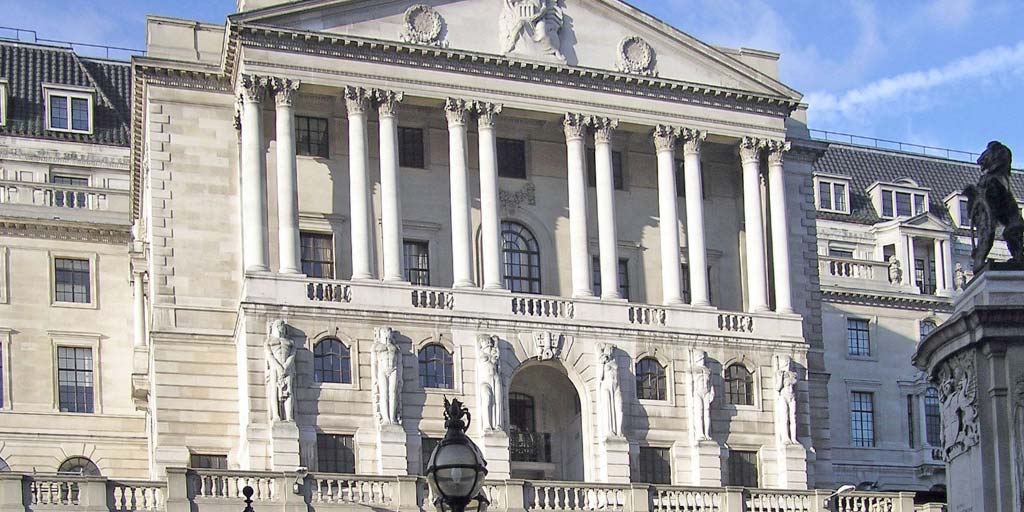
base rateThe Bank of England (BoE) have announced the Monetary Policy Committee’s (MPC) latest Base Rate decision. As many had anticipated, it was their fourth and final cut of the year, down from 4% to 3.75%.
A week ago, there were reports that the UK economy unexpectedly shrank by 0.1% across September and October.
As always, the MPC’s primary objective with setting the Base Rate has been to combat economic shortfalls and reduce inflation. Any indication of adverse activity is met with a great degree of caution.
News of the state of the economy set an expectation that this would fuel a decision to cut the Base Rate, which was already a strongly held belief among industry experts.
Of the nine members of the Monetary Policy Committee, 5 voted for a cut with 4 voting to hold the rate.
The Commercial Trust view
Our chief executive, Jorden Abbs, has commented on the Base Rate announcement. This video can be found on all of our social media channels.
Impact on markets
This final quarter of 2025 has been marked by several significant political and economic shifts, including the delayed Autumn Budget, the forecasted Base Rate cut, and – particularly relevant for landlords – the passing of the Renters’ Rights Act into law.
In the lead up to the BoE announcement, the Fed (nickname of the Federal Reserve System, the American counterpart to the BoE) cut US interest rates to 3.5% on 10th December. This was the third US interest rate cut in 2025.
With the US and UK economies being so deeply connected, this was one factor that influenced markets to be 90% certain of a Base Rate cut.
Impact on mortgage rates
The Base Rate typically does not have a direct impact on the mortgage market. Landlords on variable rate mortgages will benefit from Base Rate cuts, if their products are tied to it.
Lenders use Swap Rates to price their products. Swap Rates are a forward projection of where the money markets expect rates to go, which pre-empt Base Rate decisions.
This means that lenders price in changes to their products well in advance of the Base Rate announcement.
During the period leading up to the vote, there have only been modest changes in mortgage pricing, so the likelihood is that investors who may have been holding off for the vote, will now press on with their mortgage plans.
For the wider UK economy, the Base Rate cut has been warmly received as a ‘festive treat’, particularly for business owners hoping for lower borrowing costs.
Uncertain future
With this being the last Base Rate cut of 2025, what lies ahead in 2026 is less certain. It is currently unknown how the MPC will adapt their existing strategy for next year, and whether they will maintain a similar schedule of quarterly cuts.
The BoE predict that the policies in the Chancellor’s Autumn Budget could have a positive impact on inflation. They forecast a 0.5% decrease by mid-2026.
Lower inflation may only represent a small win for Labour in the grand scheme of things; they face many avenues of criticism. Labour’s paid-up membership figures have plummeted below 250,000 since they have been in power. Reform UK claimed to have overtaken them on this front with 268,000 members.
While membership figures are not always reflected in election votes, Reform have positioned themselves as a disruptor to the political dominance of Labour and the Conservative Party. However, with a relative lack of MPs and no General Election until at least 2029, Reform’s threat to the two-party system remains distant.
Impact of international tensions
International turmoil can have unpredictable effects on the UK and global economies. In particular, tensions between the UK and US are currently high, despite the two nations’ long-standing “special relationship”.
Donald Trump has recently filed a defamation lawsuit against the BBC and demanded up to $10 billion (£7.4bn) from the national broadcaster. Liberal Democrat leader Sir Ed Davey accused the Trump administration of having an agenda to undermine the UK’s democracy.
Concerning international conflicts, the Israel-Gaza war has simmered down after the release of several Israeli hostages was finally negotiated. However, tensions remain as Gazans now face the prospect of rebuilding the region, after it endured an enormous scale of destruction.
Meanwhile, the US has attempted to mediate the ongoing conflict between Russia and Ukraine, with mixed results. The Trump administration’s proposed peace deal would involve Ukraine surrendering portions of land to Russia in order to create a “special economic zone”, but Ukrainian President Zelensky has been sceptical of these “quicker solutions” to the war.
Anything can happen over the course of a year, which has certainly been the case for the 2020s so far. We will keep you updated on how economic predictions evolve in 2026.