

Categories: buy to let mortgages | buy to let mortgages guides | buy to let mortgage guides
buy to let mortgagesAs a landlord or buy to let mortgage investor, understanding the rules around energy performance certificates (EPCs) is more important than ever. EPC ratings affect not only your legal ability to let a property but also your mortgage options—and the rules are changing.
Here’s what you need to know about current EPC requirements, what’s likely to change in the coming years, and how it could affect your rental portfolio and mortgage planning.
If you are investing in HMO property, read our related guide “What HMO landlords should know about EPCs”.
This guide is for information purposes only, for up to date legal advice on EPC’s please speak to a legal professional.
What is an EPC?
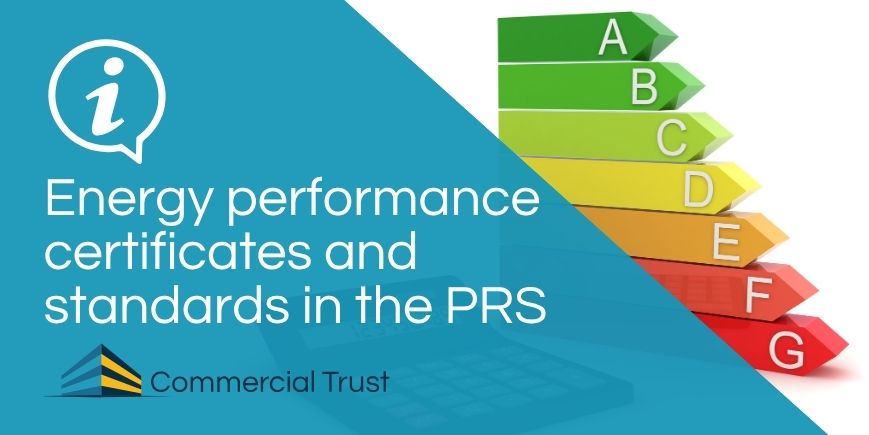
An energy performance certificate (EPC) rates the energy efficiency of a property on a scale from A (most efficient) to G (least efficient). The certificate is valid for 10 years and is legally required whenever a property is built, sold, or rented.
It gives tenants insight into running costs—and gives lenders and regulators a sense of how energy efficient your property is.
The laws around providing an EPC to tenants
Under UK law, a landlord must provide an Energy Performance Certificate (EPC) to a tenant or prospective tenant at the following points:
- When marketing the property for rent: An EPC must be commissioned before the property is put on the market. The EPC rating (A to G) must be included in all advertisements, whether online, in print, or through letting agents.
- Before the tenancy agreement is signed: A valid EPC must be made available to any prospective tenant as early as possible, and definitely before a tenancy agreement is entered into. This applies whether the tenancy is new or being renewed. EPCs are valid for 10 years, so a new one is not needed for every new tenant unless the old one has expired.
EPC rules for rental properties (current regulations)
As it stands in 2026, the minimum EPC standard for letting a residential property in England and Wales is:
- EPC rating of E or above
If your property is rated F or G, you cannot legally let it, unless you qualify for an exemption. This rule has been in place since:
- April 2018 for new tenancies
- April 2020 for all existing tenancies
Upcoming changes to EPC rules
Are there any exemptions?
Yes. A landlord can register an exemption on the PRS Exemptions Register if:
- The cost of upgrading the property to meet an E rating exceeds £3,500 (including VAT)
- You’ve made all recommended improvements up to the cost cap, but the property still doesn't meet the required standard
- It’s not possible to improve the rating due to structural constraints (for example, if the property is listed)
- The tenant refuses consent for energy efficiency improvements
Exemptions last for five years, after which they must be renewed or the property must be upgraded.
How this affects buy to let mortgages
Lenders are increasingly factoring in EPC ratings when assessing buy to let mortgage applications. Some lenders offer preferential rates for properties with EPC ratings of A to C. The majority of lenders will not accept applications for properties with EPC grades below E, unless there are specific exemptions, such as if the property is Grade I or Grade II listed.
If EPC legislation tightens in the future, both mortgage availability and property values could be affected.
What should landlords be doing now?
- Review your portfolio’s EPC ratings: If any properties are still rated D, E or below, start planning ahead. Upgrading now could be cheaper than waiting until demand spikes closer to enforcement deadlines.
- Get an EPC reassessment: Some older EPCs may underestimate your property's efficiency. Even small upgrades—like loft insulation or LED lighting—can sometimes push a property up a band.
- Factor EPC into new purchases:When buying a buy to let, consider the EPC as part of your due diligence—alongside location, yield, and tenant demand.
- Check for mortgage incentives: Some lenders now offer green buy to let mortgages with better rates or cashback for EPC-rated A to C properties. A broker can help identify these options.
The importance of EPC rules for landlords
The EPC rules are already important—and they’re set to get even tighter. As a landlord, failing to meet standards could mean not being able to let your property, losing mortgage eligibility, or even facing fines.
If you are buying a property with EPC rating A-C, let our advisors know, as it could positively impact the mortgage interest rate you can achieve.
If you are remortgaging soon and think recent upgrades to your property may impact its EPC rating, it is well worth investigating in case it can improve the mortgage you can secure.
If you have a remortgage coming up, it is well worth reviewing your existing EPC to see if your rating is below C and you could make upgrades to change this.